
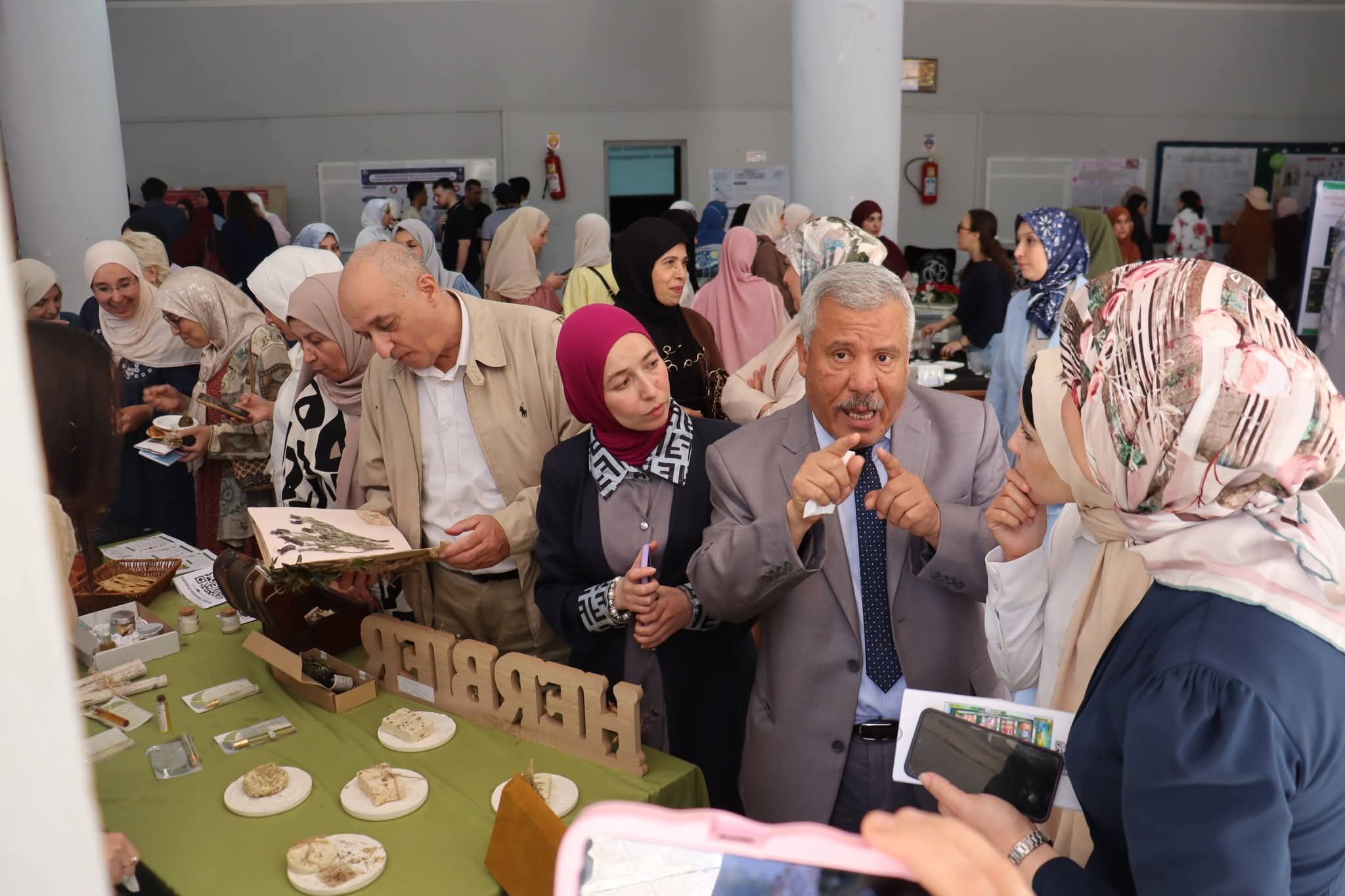
On May 20, 2026, the University of Blida 1 hosted the scientific and pedagogical event “PharmaDay 2026.” The event was organized by the Medical Hydrology and Bromatology Laboratory of the Department of Pharmacy, in coordination with first-year and fifth-year pharmacy students. Held at the university’s Grand Lecture Hall, the event took place under the theme: “Strengthening Scientific Research and Highlighting Pharmacy Students’ Projects and Innovations.”
Official Opening
The inauguration was presided over by the Rector of the University of Blida 1, Professor Mohamed Bezina, in the presence of the faculty community led by the Dean of the Faculty of Medicine, along with numerous professors, researchers, guests, and partners from the scientific and academic sectors.
In his opening remarks, the University Rector praised the efforts of the pedagogical staff and students in organizing this distinguished scientific event. He emphasized:
-
Support for Student Initiatives: The university’s commitment to encouraging purposeful student-led activities.
-
Innovation & Research: The role of scientific research and innovation as fundamental pillars for elevating university education.
-
Openness: Strengthening the university’s ties with its scientific, economic, and social environment.
Highlights of the Event
Accompanied by department staff and supervisors, the Rector toured an exhibition of research projects, scientific posters, and practical workshops organized on the sidelines of the event. He reviewed various research works and innovations presented by the students, receiving detailed explanations that reflected the high academic standards and promising talents within the Department of Pharmacy.
Scientific Program
The “PharmaDay 2026” program featured a diverse range of activities, including:
-
Lectures: Presentations on entrepreneurship within the university environment.
-
Student Contributions: Scientific oral presentations and interactive workshops.
-
Key Themes: Discussions focused on several health and scientific axes, such as:
-
Bromatology and health.
-
Nutrition and disease.
-
Dietary supplements and food security.
-
Public health and medical hydrology.
-
Herbal medicine and its therapeutic applications.
-