

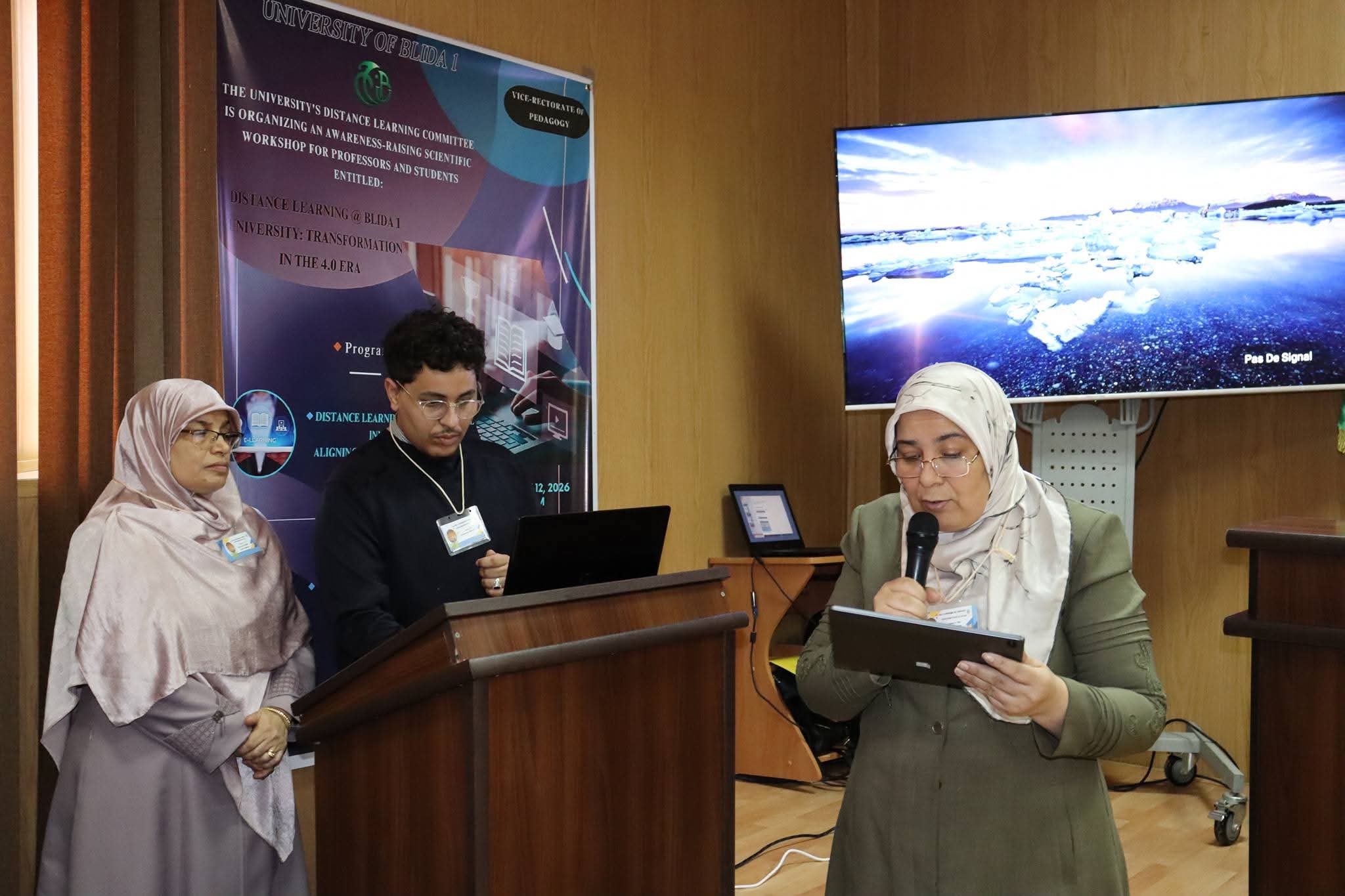
Within the framework of implementing the digital transformation strategy in the higher education sector, the Distance Learning Committee of Blida 1 University organized a scientific workshop titled:
“Distance Learning at Blida 1 University: Transformation in the 4.0 Era.”
The event took place on Thursday, February 12, 2026, at the lecture hall of the Institute of Aeronautics and Space Studies, under the supervision of the Vice-Rectorate in charge of Pedagogy. The workshop was attended by a significant number of professors and students from various faculties and institutes.
Key Highlights from the Opening Remarks
Professor Bezzina Mohamed (Rector of the University): Emphasized that the shift toward digital education is a strategic choice necessitated by rapid daily digital transformations. He stressed that the university seeks to establish a modern pedagogical model based on quality, innovation, and enhanced academic performance.
Dr. Wahrani Leila (Head of the Committee): Noted that developing distance learning is not limited to providing digital platforms. Instead, it requires continuous training for professors, effective pedagogical support, and the constant updating of evaluation mechanisms to ensure equal opportunities and improve educational outcomes.
Workshop Program & Discussions
The program featured two scientific presentations focusing on:
Aligning distance learning with the national strategy and fostering pedagogical innovation.
Discussing the challenges and prospects of e-exams to ensure academic integrity and assessment quality.
The presentations were followed by rich scientific discussions, reflecting the audience’s commitment to analyzing current issues and proposing practical solutions to transition toward a smart, quality-driven university.
Conclusion & Recommendations
The workshop concluded that digital transformation requires a comprehensive institutional vision beyond just using electronic platforms, specifically:
Developing the digital competencies of both faculty and students.
Instilling a culture of pedagogical innovation.
Adopting reliable and transparent digital evaluation mechanisms.
This initiative serves as a practical step toward building a smart university model capable of interacting with global shifts and providing high-quality education that meets both current challenges and future requirements.