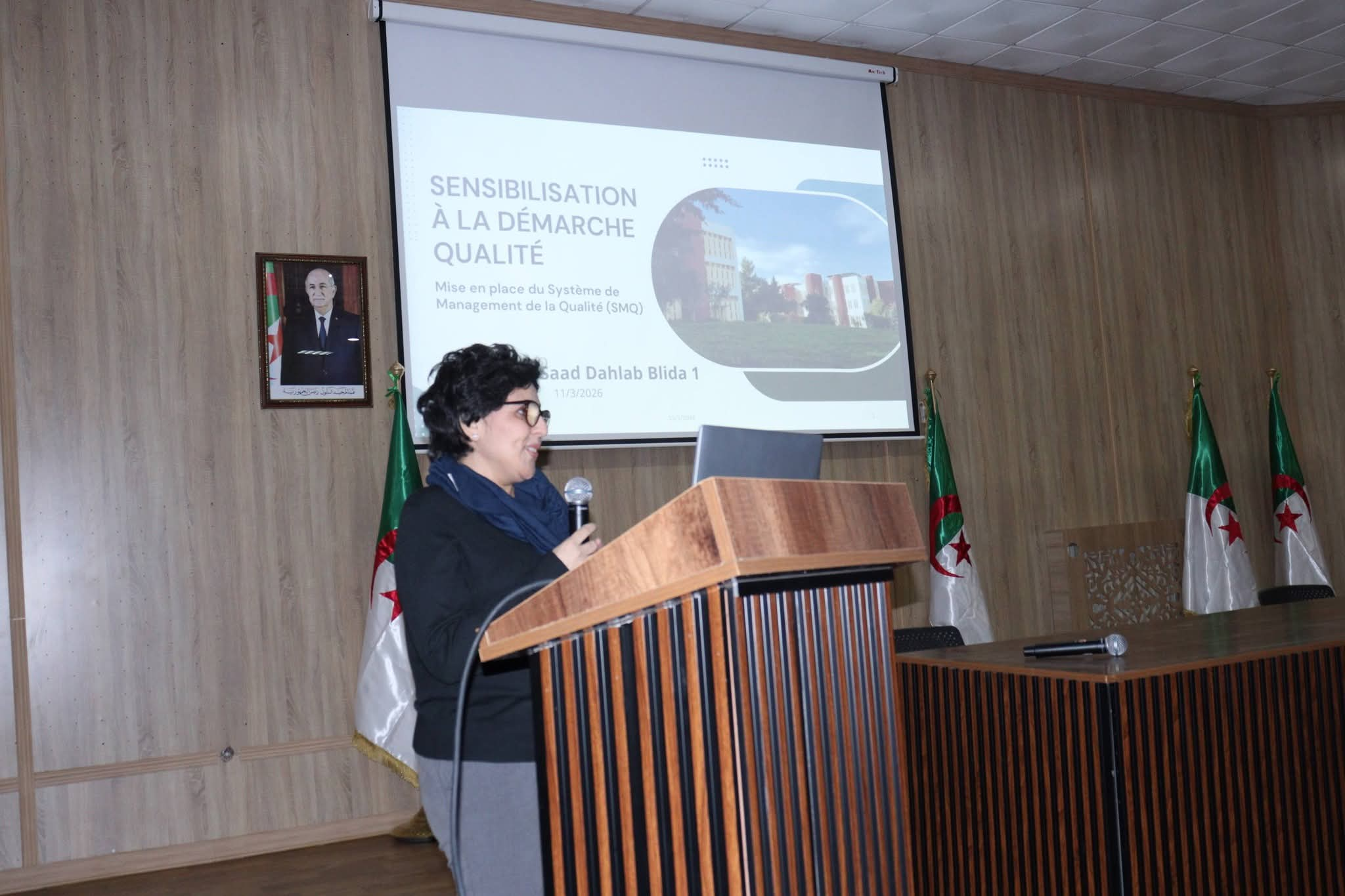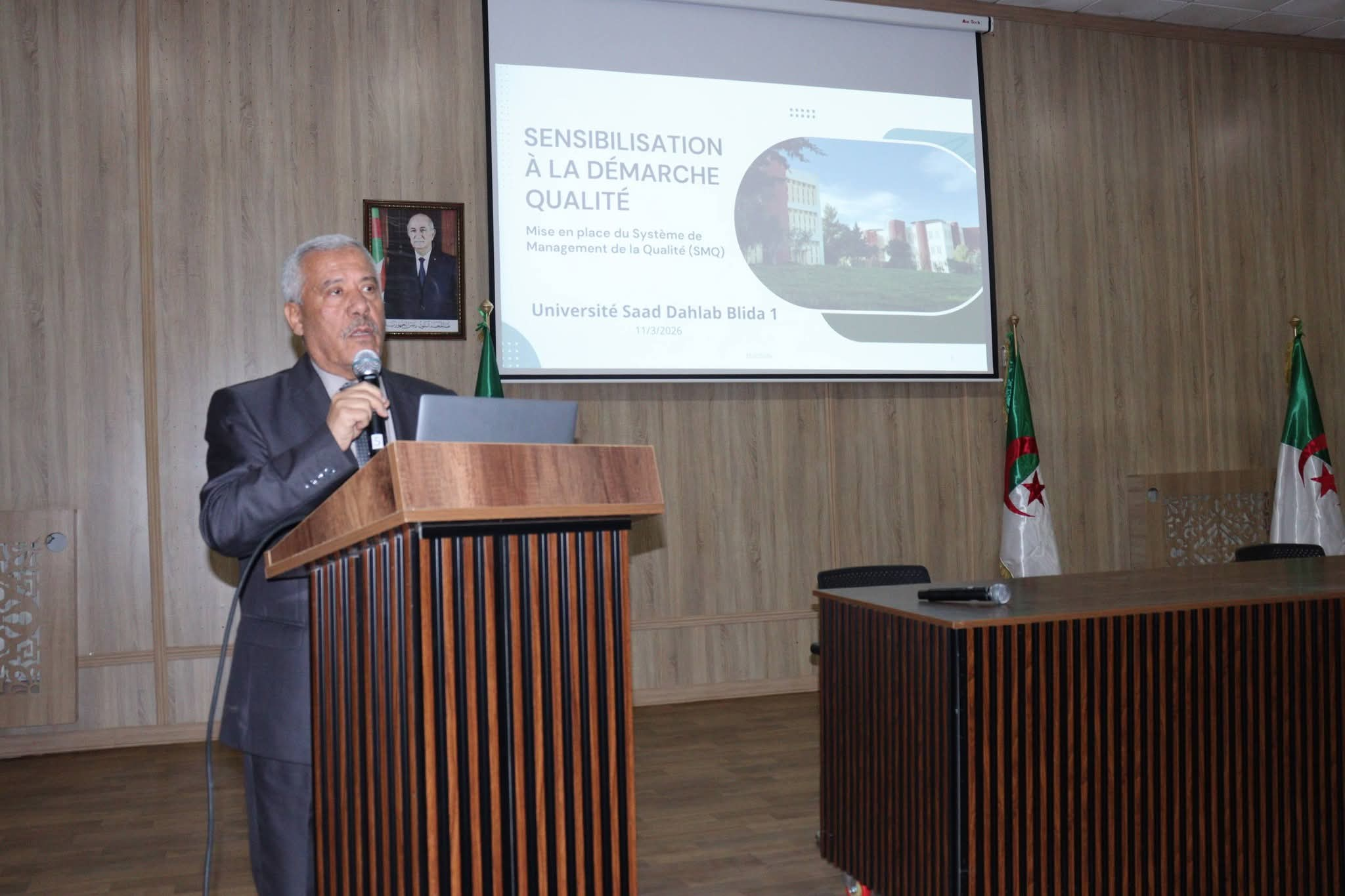
As part of its efforts to establish a culture of quality and improve institutional performance in accordance with international standards, the University of Blida 1 organized an awareness day on the importance of the ISO 9001:2015 Quality Management System. The event, held in the lecture hall of the university's sports complex, was organized by the Quality Assurance Unit and attended by the University Rector, Professor Bezina Mohamed, along with his deputies, deans of faculties and their deputies, directors of institutes, the Secretary General, and academic and administrative staff.
In his opening remarks, the university director noted that Blida 1 University is currently undergoing significant transformations aimed at improving its institutional performance. These transformations include strengthening the digitalization process and modernizing management methods, a shift that necessitates the combined efforts of all stakeholders within the university community. He also emphasized that quality has become a fundamental pillar for enhancing the competitiveness of higher education institutions, pointing out that adopting the ISO 9001:2015 standard represents a strategic choice aimed at improving institutional performance and developing educational, research, and administrative services, thereby reinforcing the principles of good governance and continuous improvement.
The meeting included specialized scientific presentations covering various theoretical and practical aspects of quality management systems, including a presentation on the ISO 9001:2015 quality management system project, its structure, phases, and strategic objectives, in addition to introducing the principles of quality management, which are based primarily on focusing on beneficiaries and stakeholders.
This meeting marked a significant milestone in raising awareness of the importance of quality within the university community and supporting the university's path toward achieving institutional accreditation according to international standards. The event concluded by emphasizing that the success of a quality management system requires the active participation of all members of the university community, recognizing quality as a collective responsibility and a fundamental tool for improving performance and developing the university system.