

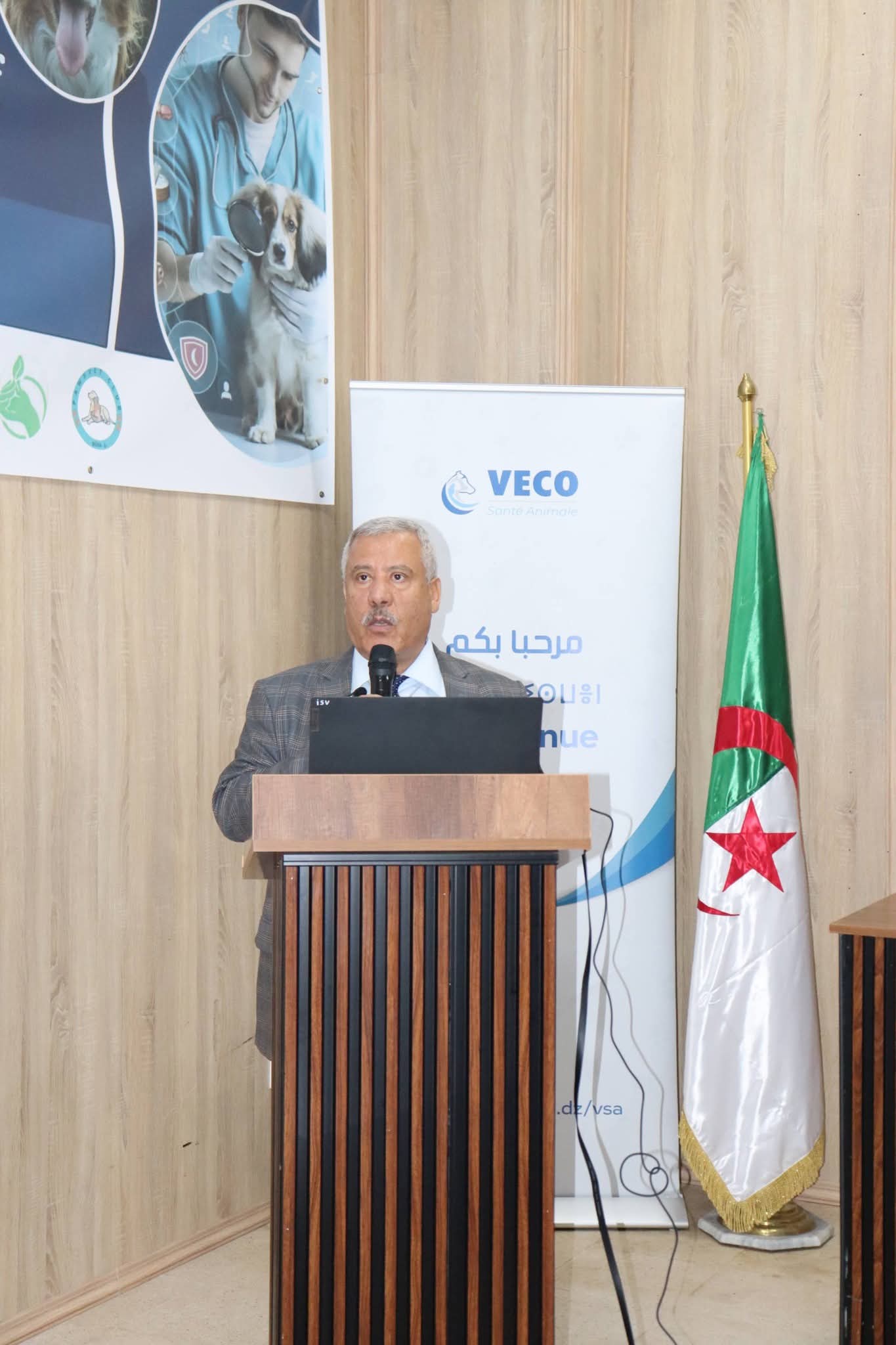
In the framework of promoting scientific research and exchanging veterinary expertise, the Institute of Veterinary Sciences at University of Blida 1, in collaboration with scientific and professional partners, organized the First National Veterinary Medicine Day on Sunday, May 3rd, 2026, at the institute’s lecture halls.
The event was inaugurated by the Rector of University of Blida 1, Professor Mohamed Bezina. In his opening speech, he emphasized the importance of such scientific gatherings in supporting academic research and building bridges between the university and its professional environment, particularly in fields related to public health.
Theme and Objectives
The event was held under the slogan:
“Dog Parasites and Zoonotic Diseases in Algeria: Health Challenges and the One Health Approach”
This theme is of critical importance given current health challenges and the increasing intersection between human, animal, and environmental health.
The Director of the Institute of Veterinary Sciences also delivered a speech, highlighting the event’s role in shedding light on the reality of zoonotic parasitic diseases in dogs within Algeria. He stressed the necessity of adopting a multidisciplinary “One Health” approach, which is pivotal in preventing and combating these diseases.
Key Participants and Scientific Program
The event was attended by a distinguished group of university professors, researchers, and veterinarians, alongside doctoral and undergraduate students. According to Professor Hocine Ziam, the event coordinator, the program featured several valuable presentations focusing on:
-
Epidemiological Situation in Algeria: Analysis of parasites transmitted from dogs to humans.
-
Targeted Parasites:
-
Nematodes (Roundworms)
-
Cestodes (Tapeworms)
-
Protozoa (Single-celled parasites)
-
Ectoparasites (Ticks and fleas)
-
-
Public Health Risks: Specifically those threatening vulnerable populations.
Conclusion and Outcomes
The seminar served as a platform for discussing prevention and control strategies based on the “One Health” integrated approach, aiming for sustainable public health protection.
The event also featured oral presentations and poster sessions, providing a space for young researchers to showcase their work and contribute to the enrichment of the scientific debate.